The RealKH Monthly · Issue 001
The Art of Going Further
Travel · Photography · Perspective · Performance
The RealKH Monthly · August 2026
A cinematic journey through movement, observation, discipline and the small systems that make a wider life possible.
Open the issueInteractive episode template
Use the arrows, swipe, or press your keyboard’s arrow keys.
The RealKH Monthly · Issue 001
Travel · Photography · Perspective · Performance
Contents
One question.
Twelve chapters.
One continuous journey.
Every journey begins long before the flight.
It begins with a decision.
The pages that follow are not simply articles about travel, photography, trading or the night sky.
They are different ways of exploring one question.
Some answers are found in movement.
Others arrive through observation, discipline and experience.
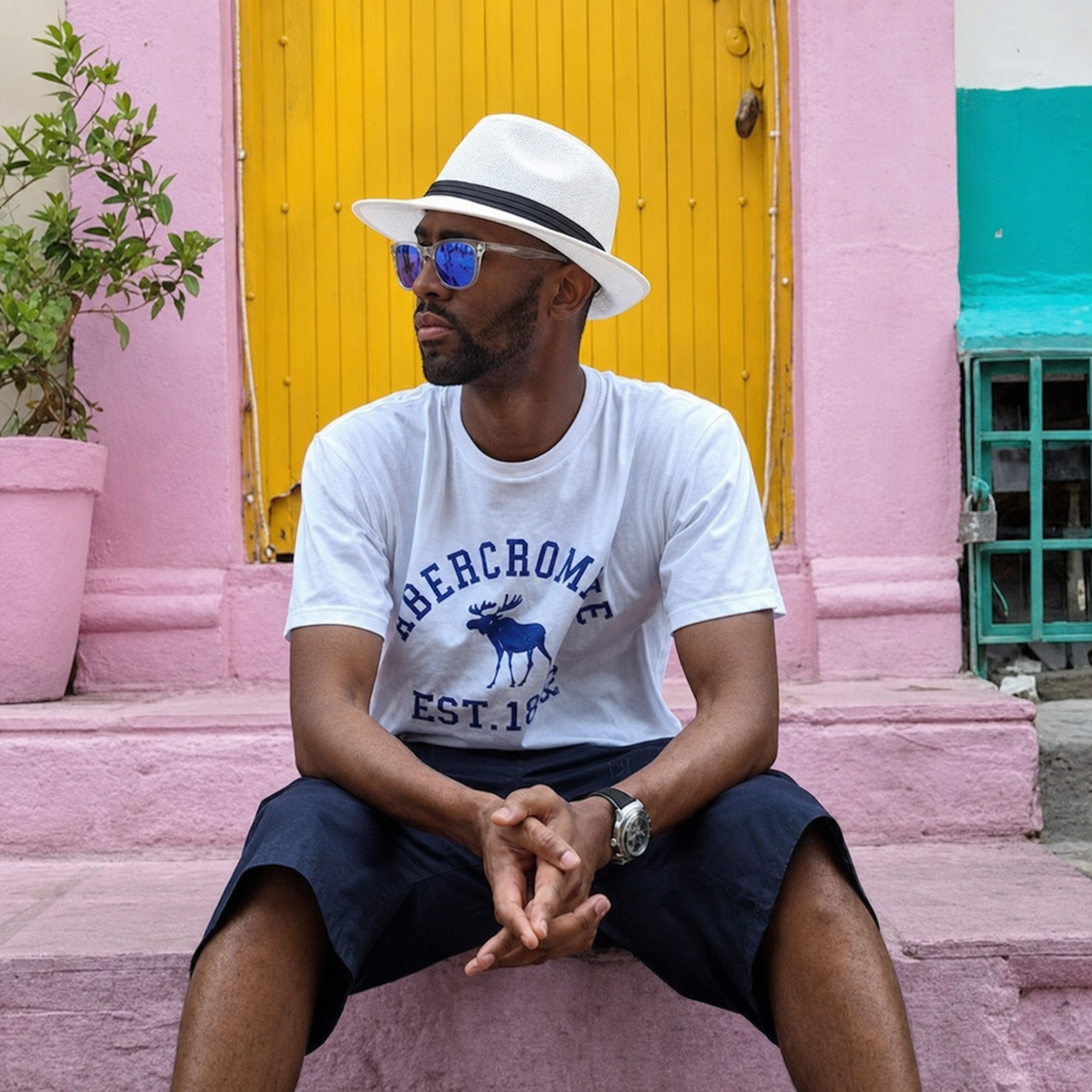
From the editor
Most of us aren't short of ideas. We're short of beginnings.
There is always another reason to wait: more money, more confidence, more knowledge, a clearer plan, a better moment. Waiting can even feel responsible because it protects us from discovering whether the thing we want will actually work.
But there is a cost.
Months become years surprisingly quickly.
So this first issue isn't really about travel, photography, trading or any of the subjects you'll encounter over the pages ahead.
It's about movement.
We'll cross a city, look through a camera, stand beneath a night sky, enter an uncertain market, borrow ideas from a book and build a few systems along the way.
Not because these things necessarily belong together.
But because each of them asks a version of the same question:
What happens when we stop waiting and participate in our own lives?
I won't pretend to have the answer.
My role here is simply to explore the question with you—to go somewhere, try something, learn from it and bring back whatever seems worth sharing.
You decide what deserves to come with you.
Welcome to Issue 001.
— Kevin
Six Senses Koh Samui · Thailand
Perspective
There is something quietly fascinating about airports. They're among the few places where thousands of people with completely different lives briefly share the same destination—not in terms of where they're going, but in what they're doing. Some are returning home after months away. Others are setting off on holidays they've planned for years. Business travellers move with quiet familiarity while families negotiate passports, boarding passes and excited children. Around them, departure boards flicker between cities, conversations drift through different languages and the steady rhythm of rolling suitcases fills the terminal. For a few hours, everyone exists in the same space, suspended somewhere between where they have been and where they are about to go.
The Waiting Room
What has always interested me isn't necessarily the aircraft or the destinations. It's the moment boarding begins. People gather their belongings, finish the last sip of coffee, fold away a newspaper or close a laptop, then calmly join the queue when their flight is called, or realise their boarding gate is 14 minutes away and move towards it with a sense of organised chaos. They don't stand at the gate questioning whether they're ready. They don't ask for another week to prepare or another month to think things through. At some point, preparation ends and movement begins. It happens so naturally that most of us never stop to notice it.
Perspective · Preparation
Confidence rarely announces itself before the experience. More often, it arrives because of it.
Outside the airport, however, we often behave very differently. We wait until we've saved a little more money, learned a little more, gained more confidence or found the perfect time to begin. We tell ourselves that we're preparing, and often that's true. Planning has value. Research has value. Practice has value. But there is a subtle point where preparation quietly changes into postponement, and recognising the difference isn't always easy. The longer we wait, the more convincing our reasons become.
I've found myself thinking about that more often than I'd like to admit. Not only before travelling, but before starting projects, publishing videos, learning new skills and making decisions that carried no guarantee of success. Looking back, very few of the experiences that have shaped me began with certainty. They began with enough preparation to take the next step, followed by a willingness to accept that the rest would have to be learned along the way. Confidence rarely announces itself before the experience. More often, it arrives because of it.
Perspective · Experience
Movement doesn’t require complete certainty. It requires a decision.
Travel has reinforced that lesson time and again. Photography has done the same. The best photographs are rarely the ones I planned perfectly in advance; they're usually the result of paying attention, adapting to the moment and being willing to stand somewhere a little longer than everyone else. Even standing beneath a sky full of stars has a habit of changing perspective. When you're looking at light that has travelled for thousands or millions of years to reach you, many of the reasons for waiting begin to feel surprisingly small.
Perhaps that's why airports continue to hold my attention. They remind me that movement doesn't require complete certainty. It requires a decision. Every person walking towards a departure gate is stepping into something they cannot fully predict. Flights are delayed, plans change and journeys rarely unfold exactly as expected. Yet they walk anyway, trusting that the experience waiting on the other side is worth leaving the familiar behind.
Perspective · A decision
As you read the pages that follow, I don't expect you to see yourself in every destination or every photograph. That's not really the point. My hope is that somewhere within these stories, observations and experiences you'll recognise a question that belongs to your own life. Maybe the place you've been waiting to visit isn't another country at all. Maybe it's an idea, a conversation, a business, a creative project or simply a version of yourself you've quietly postponed becoming. Different destinations often begin with exactly the same decision.
This issue isn't intended to provide all the answers. It's simply an invitation to look at movement differently. Not movement across a map, but movement in thought, perspective and action. Because every journey, no matter where it eventually leads, begins in the same place. Someone decides it's time to stop waiting and start moving.
Journey
Perhaps the hardest journey isn't the one that crosses oceans.
It's the one that begins before anyone notices you've left.
Every passport receives its first stamp.
Every photograph begins with raising the camera.
Every meaningful change begins with one decision.
Turn the page.
The journey starts here.
Journey · Bangkok
The Art of Slowing Down in Bangkok
The first thing Bangkok teaches you is that trying to understand it too quickly is impossible.
After leaving Suvarnabhumi Airport, whether by train or taxi, you slowly find yourself descending into the density and chaos of this beautiful city. At first glance, it feels overwhelming. Elevated trains weave between glass office towers while long-tail boats leave trails of deep charcoal-grey smoke that gradually clear to reveal canals that have existed for generations. Food vendors prepare lunches just metres away from luxury shopping centres, while shrines decorated with fresh flowers sit comfortably beside busy intersections where traffic seems to move according to rules only locals truly understand. Every direction offers something to captivate your attention, and for the first few hours it's tempting to believe you'll never make sense of any of it.
Then, almost without noticing, something changes.
Journey · Attention
Bangkok rewards curiosity far more than urgency.
You stop trying to see everything.
Instead, you begin noticing individual moments.
A street vendor carefully arranging fruit before the lunchtime rush. Office workers gathering at tiny coffee shops hidden between buildings that tourists walk straight past. The sound of birds replacing traffic as you step beneath the trees of Lumphini Park. The city doesn't become quieter, but your attention becomes sharper. Bangkok rewards curiosity far more than urgency.
One of the decisions that will shape your experience is where you choose to stay. A well-chosen hotel does far more than provide somewhere to sleep. It quietly positions you within arm's reach of another one of Bangkok's hidden gems. The right hotel doesn't simply provide a comfortable room; it changes the way you experience a destination. It determines whether your mornings begin beside a busy motorway or beneath trees filled with birdsong, whether your first coffee comes from a familiar chain or a family-run café where nobody expects to speak English. Location quietly shapes perspective.
Journey · The city in layers
The city reveals itself in layers rather than landmarks.
It's easy to begin each morning without much of a plan. That would normally make many people uncomfortable. Many travellers enjoy researching destinations, saving maps and building itineraries that promise to make the most of every hour. The cadence of Bangkok slowly persuades you to let go of that habit. Some of the most memorable moments aren't the ones you plan. They happen when you turn down an unexpected side street, pause outside a market or simply decide to follow your curiosity instead of your schedule.
One of the greatest rewards of slowing down is that you begin noticing what most people walk straight past. The city reveals itself in layers rather than landmarks. Morning light catching the steam rising from a street food stall. A monk quietly crossing a busy road. Reflections dancing across the Chao Phraya River. The rhythm of a market as it prepares for another day. The unmistakable soundtrack of tuk-tuks fills the streets, engines enthusiastically revving as drivers try to tempt another traveller into experiencing the city from the back seat. Love them or avoid them, they quickly become part of Bangkok's identity—impossible to ignore and strangely familiar by the time you leave. By the time you raise your phone or camera, you're no longer taking a picture simply because something looks interesting. You're capturing a moment that would have gone unnoticed had you hurried on to the next attraction.
Journey · Quiet observation
Photography has a habit of teaching patience in places where speed feels more natural. It's easy to walk quickly through Bangkok, ticking famous landmarks off a list before moving on to the next. It's much harder to stand still for an hour and observe how the light changes, how people move through a space or how an ordinary street corner quietly becomes extraordinary if you're prepared to wait. The photographs become less about proving where you've been and more about preserving a moment you were fully present for.
Editor’s Stay
[Editorial note — a short, independent explanation of why this hotel changes the experience of Bangkok.]
Journey
Bangkok never asked me to hurry.
It simply rewarded the moments I slowed down enough to notice.
Sometimes the greatest souvenir isn't something you carry home.
It's the way a place quietly changes how you see the world.
Next:
THROUGH THE LENS
Through the Lens
Photography begins long before the shutter.
The first act of photography is not taking a picture. It is giving something your attention for long enough that it begins to reveal itself.
Most places arrive as noise. A new street presents signs, faces, movement, colour and sound at once. The instinct is to collect everything before it disappears. We lift the camera because the moment feels temporary, but urgency can make us record a place before we have actually experienced it. The frame becomes proof that we were there rather than evidence that we noticed.
Observation asks for a different pace. It begins when we stop searching for a photograph and allow the scene to continue without us. Light moves across a wall. A conversation changes the posture of two people. Someone waiting for a bus steps forward, then back. A reflection appears for only a few seconds as traffic passes. None of these moments announces itself as important. Their value comes from attention.
To see differently is to become sensitive to relationships. Brightness matters because of the shadow beside it. Stillness becomes visible because the rest of the street is moving. A single expression can carry the emotional weight of an entire crowd. The photographer learns to notice not only what is present, but what is about to change.
This is why patience matters more than accumulation. Staying with one corner often reveals more than walking through ten streets. The first glance tells us what a place looks like. The longer look begins to suggest how it feels. Familiar patterns emerge: who belongs there, how people share the space, where the light gathers and when the energy rises or falls.
Attention also changes our relationship with the people inside a photograph. Slowing down creates time to recognise that a public space is not a stage arranged for us. The person crossing the frame has a destination, a history and a reason for being there. Observation becomes more thoughtful when curiosity is accompanied by respect. We begin looking for moments that feel honest rather than merely dramatic, and for photographs that acknowledge the life continuing beyond their edges.
The camera can help us practise this attention, but it cannot replace it. It narrows the world into a frame and asks us to decide what deserves to remain. That decision is shaped before the camera reaches the eye. It is shaped by curiosity, empathy and the willingness to be present without demanding that every moment become useful.
Over time, this way of looking follows us even when the camera stays at home. We notice the colour of late afternoon in a familiar room, the distance between two people in conversation and the repeated gestures that give an ordinary place its rhythm. Photography becomes less about collecting exceptional scenes and more about recognising how much is already happening around us.
Eventually the shutter is pressed. By then, the photograph is less an interruption than a conclusion. The real work has already happened. We slowed down. We stayed. We noticed. The image simply carries that moment forward.
Through the Lens · Full frame
Through the Lens · Frame study
Before there was a subject, there was a change in the light. It moved across the street slowly, separating one small area from everything around it. People continued through the frame without looking, but each person briefly became part of the same composition. The scene was ordinary. What held me was the way light gave it a temporary order. The background carried its own quieter details: worn paint, a half-open doorway and reflections that appeared whenever a vehicle passed. None was important alone. Together they gave the scene a sense of lived time. I realised I was not waiting for something new to arrive. I was waiting for the elements already present to acknowledge one another.
Nothing dramatic was happening, which was precisely why stopping mattered. The moment did not demand attention; it rewarded it. I stayed because the relationship between the background, the passing figures and the empty space felt unfinished. Walking on would have produced another view. Waiting offered the possibility of understanding this one. There was also a rhythm to the place that could not be read immediately. People crossed at similar intervals, each taking a slightly different path through the same patch of light. After several minutes, anticipation replaced reaction. I could sense when the frame was about to become balanced, not because I controlled the scene, but because I had finally begun to understand its pace.
At first, the frame was mostly geometry. Then a person entered and the shapes acquired scale. Another paused at the edge, creating tension between movement and stillness. The photograph changed because the people changed it, but also because my expectation changed. I stopped waiting for a perfect arrangement and recognised the quieter balance already in front of me. The strongest moment was less polished than the one I had imagined. A gesture interrupted the clean lines and introduced uncertainty. That interruption made the scene human. The picture no longer depended on symmetry or spectacle. It depended on the brief relationship between people who may never have noticed one another, held together by the fraction of a second in which their movements crossed.
The image cannot preserve the heat, the conversation behind me or the sound that made the subject glance away. It cannot explain why the scene felt familiar in a place I had never visited. A photograph keeps surfaces, gestures and light. The rest remains with the person who was there—the atmosphere surrounding the fraction of a second that became the frame. Outside its borders, traffic continued and another conversation began. The subject disappeared into the crowd almost immediately. Even my own hesitation—the question of whether to lift the camera or simply keep watching—is absent. Those invisible details are not failures of the photograph. They are reminders of its limits. The frame offers one piece of experience and leaves enough unsaid for the viewer to bring something of their own.
Through the Lens · Observation framework
Notice where it falls, where it disappears and what it briefly separates from the scene.
[Caption] · [Location] · [Date] · [Camera] · [Lens]Find the quiet beside the noise, the old beside the new and stillness inside movement.
[Caption] · [Location] · [Date] · [Camera] · [Lens]Watch repetition long enough to recognise the interruption that makes the frame feel alive.
[Caption] · [Location] · [Date] · [Camera] · [Lens]Observe gesture and relationship without reducing anyone to decoration within the composition.
[Caption] · [Location] · [Date] · [Camera] · [Lens]Stay after the obvious photograph. The second moment often carries more truth than the first.
[Caption] · [Location] · [Date] · [Camera] · [Lens]Editor’s Kit
[PRODUCT NAME]
[SHORT EDITORIAL REVIEW — an independent assessment of how the product supports attentive photographic work.]
Through the Lens · One frame
Some photographs do not need a sequence around them. They contain their own beginning and end: a gesture, a distance, a particular quality of light. The longer we look, the less the image feels like a record of what happened and the more it becomes a place we can enter.
This frame matters because nothing inside it appears to be performing for the camera. The moment continues on its own terms. Its details remain unresolved enough for memory and imagination to participate. We do not need to know everything about the scene. We only need to feel that something true passed through it.
A single photograph can hold an entire journey when it preserves not simply what we saw, but the attention with which we saw it.
Section Three
Every journey begins beneath the same sky.
The places we visit change our perspective.
The night sky changes our sense of scale.
Turn the page.
The universe has its own stories to tell.
Night field plan
Planning creates the freedom to be present once the stars appear.
Starting exposure
Begin around ISO 3200, inspect the histogram and adjust for the actual sky. Technique serves the image—not the other way round.
Perspective
Scout in daylight. Arrive before darkness. Compose once. Then give the sky time to write.
That sense of scale is useful when the next decision feels too important—especially when money and uncertainty enter the frame.
The Edge
Trading is not prediction. It is disciplined participation.
The work is to define the conditions, size the risk and accept the outcome before entry. Confidence should come from repeatability—not from being certain.
The first edge is knowing when there is no trade.
Before the market
If the answer is unclear before entry, pressure will not make it clearer.
Risk
Risk small enough to remain observant. The objective is not to avoid losing; it is to prevent one outcome from distorting the next decision.
Process scorecard
A profitable mistake is still a mistake. A well-executed loss can still be good work.
Post-trade review
The journal is a feedback system, not a courtroom.
The handover
Checklists, limits and reviews protect good intentions from the pressure of the moment.
Repeatability depends on the systems surrounding the decision, so the story moves from psychology to workflow.
Systems
A personal operating system should reduce friction, not create administration.
The system begins at the point of capture.
The weekly reset
A week should be designed before other people’s urgency designs it for you.
AI with intention
The goal is not to automate being human.
Let tools handle repetition, comparison and first-pass structure. Keep judgement, taste and final responsibility close. The test is simple: does the workflow create more room for thinking, making and living?
A useful system becomes almost invisible.
Design principle
If maintaining the workflow becomes the work, simplify it.
Systems improve when they are fed by better ideas—which is why the next stop is the book shelf.
Book Shelf
Oliver Burkeman
The lesson is not to fit everything in. It is to choose what deserves a finite life. Attention becomes the real measure of freedom.
The book’s argument is uncomfortable because it removes the fantasy of getting everything done.
Three ideas to keep
This month’s action: create one fixed hour each week with no productive purpose.
Ideas matter when they change what we use, carry and practise—so theory gives way to the creator’s toolkit.
Creator Toolkit
The best tool is rarely the newest. It is the one you understand well enough to forget.
The usefulness test
Upgrade when a known limitation repeatedly blocks the work—not when novelty briefly improves motivation.
This month, the toolkit became the test: could less equipment produce more attentive work?
Monthly Experiment
The hypothesis: fewer choices create stronger visual consistency.
The limitation changed where I stood, how long I waited and what I noticed.
The result
Without focal-length decisions, the camera came up faster. Familiar distances developed. The final sequence felt coherent, but the more useful outcome was renewed trust in observation.
The experiment created evidence. The Freedom Index turns that evidence into an honest monthly reflection.
Freedom Index · August
Overall 7.6 / 10. More unhurried mornings; fewer reactive commitments. Next month’s focus: protect the first hour of the day.
Monthly reflection
The score matters less than the conversation it creates.
Reflection is useful only when it changes the next chapter.
Closing Thoughts
A wider life is not assembled in one dramatic move. It is built through repeated acts of attention: the ferry taken, the rule followed, the book closed, the camera raised.
The issue ends where the next month begins—with one deliberate action.
Next month · Issue 002
New places. Revised systems. Another experiment. A study of how renewal becomes a practice rather than a promise.
Published on the first day of next month.
The RealKH Monthly
Travel · Photography · Performance · Learning · Intentional Living
Tip: click the left or right edge of the magazine to turn the page.